- Fast Shipping
- FFL Transfers
- No CC Fees
- 4.9 Google Rating
- (313)779-3877
- St. Clair Shores, Mi

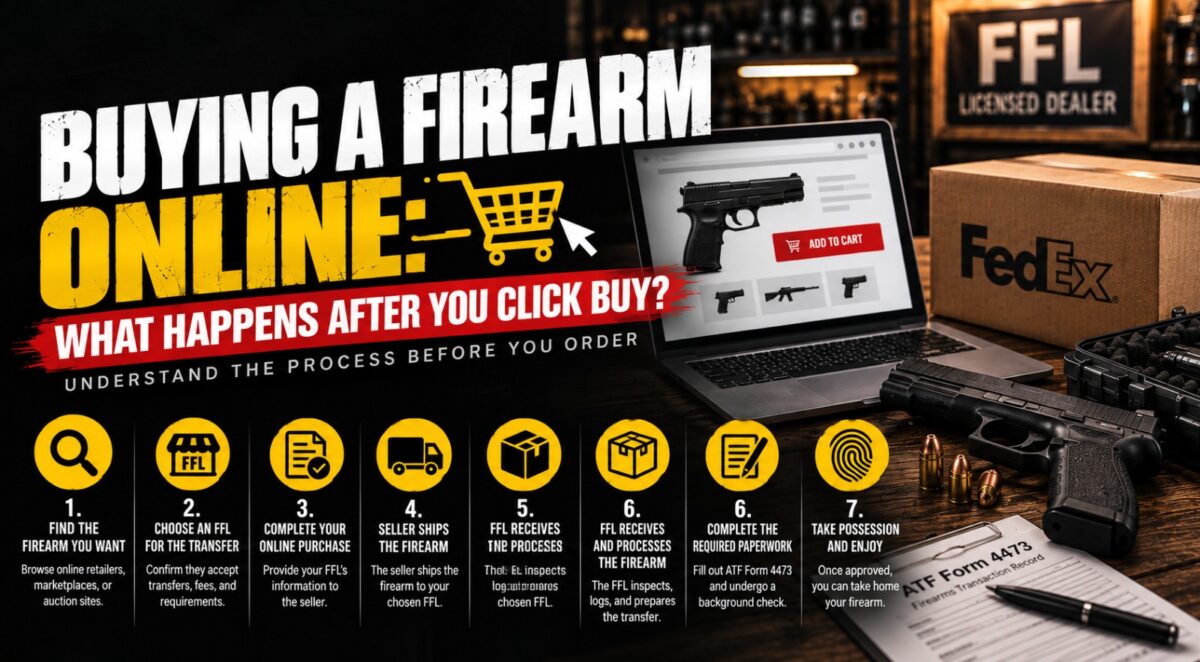
Buying a firearm online can give customers access to a much wider selection of firearms, but the process is different from ordering an ordinary product online.
When you purchase a firearm from an online retailer, marketplace, or auction site, the firearm generally does not simply get shipped directly to your home. For an interstate transaction involving an unlicensed buyer, federal law generally requires the firearm to be transferred through a Federal Firearms Licensee (FFL) in the buyer's state.
Understanding how those two parts work can make the entire process much easier.
The first part is usually the easiest.
You may find a firearm through:
Before purchasing, make sure you understand exactly what you're buying.
Pay attention to:
This is where many first-time online buyers become confused.
The seller may be located in another state, but the firearm generally needs to be transferred through an FFL in the buyer's state when federal law requires an interstate transfer through a licensee.
An FFL, or Federal Firearms Licensee, is a business or individual licensed by the Bureau of Alcohol, Tobacco, Firearms and Explosives (ATF) to conduct certain firearms-related transactions.
Your FFL acts as the licensed intermediary for the transfer.
Before placing an order, it's a good idea to contact the FFL you intend to use and ask:
Once you've selected your firearm and confirmed the transfer arrangements, you can complete the purchase through the online seller.
The online seller will typically need information about the FFL receiving the firearm.
The exact process can vary depending on the seller and the FFL.
Some sellers already have FFL information on file for participating dealers, while others may require the receiving dealer to provide documentation.
Once the order is processed, the seller ships the firearm to the receiving FFL.
The firearm is not being transferred to you simply because you purchased it online.
Instead, it is being sent to the licensed dealer who will handle the transfer to you.
Once the firearm arrives, the FFL processes it according to the requirements applicable to the transaction.
At this point, the firearm becomes part of the dealer's transfer process.
The dealer may need time to:
Every dealer may have its own procedures for handling incoming transfers.
When you're ready to complete the transfer, you'll generally need to appear at the FFL and provide the required identification and information.
For a standard dealer transfer to a nonlicensee, federal requirements include completion of ATF Form 4473, verification of the transferee's identity, and a background check through NICS unless an applicable exception applies.
The FFL is responsible for ensuring that the transfer is conducted according to the requirements that apply to the transaction.
As part of the standard dealer transfer process, the FFL contacts the National Instant Criminal Background Check System, commonly known as NICS, unless an applicable exception applies.
Depending on the response and applicable law, the transfer may proceed, may be delayed, or may be denied.
The FFL must follow the requirements applicable to the transaction and cannot transfer a firearm when a denial prevents the transfer.
A delay does not necessarily mean that something has gone wrong with your order.
A NICS response can require additional processing before the transfer can be completed.
The important thing is to allow the FFL to follow the applicable process rather than assuming the firearm can be released immediately.
Your FFL can explain what happens next based on the status of your transaction and the laws that apply.
Before heading to the store, ask your FFL exactly what you need.
Depending on the transaction and applicable law, you may need appropriate government-issued identification and other documentation.
It is better to confirm beforehand than arrive at the store without something required to complete the transfer.
This is one of the most important parts of buying a firearm online.
Federal law is only part of the picture.
The rules that apply to a firearm transfer can depend on factors such as:
Because laws can change, information found in an older article, forum post, social media discussion, or previous purchase experience may not reflect the requirements that apply today.
For that reason, customers should verify the current requirements before beginning a transfer.
Don't wait until after your firearm has shipped to figure out where it is going. Choose and contact your FFL first.
Different dealers have different policies regarding incoming transfers. Ask first.
The firearm's online price isn't necessarily the total cost of the transaction. Consider shipping, transfer fees, taxes, and any other applicable charges.
A tracking number showing “Delivered” doesn't necessarily mean the firearm is ready for you to take possession.
Firearm laws and administrative requirements can change. Always confirm the current requirements that apply to your situation.
The exact process can vary depending on the firearm, seller, FFL, and applicable federal, state, and local requirements.
An online firearm purchase may look very different from buying a firearm directly from a local store, but the basic concept is straightforward:
The most important thing is to communicate with your FFL before placing the order.
At ICB Firearms, we believe customers should understand the process before they begin. If you're considering purchasing a firearm online and have questions about the transfer process, our team can explain how our transfer process works and help you understand what to expect when your firearm arrives.
VISIT ICB FIREARMSPrecision. Integrity. Community.
This article is intended for general educational purposes and is not legal advice. Firearm laws and transfer requirements can change, and additional federal, state, or local requirements may apply. Customers should verify the current requirements applicable to their specific transaction with the appropriate authorities and their FFL.
Added to cart
Check out our shop to see what's available
Loading coupons...