- Fast Shipping
- FFL Transfers
- No CC Fees
- 4.9 Google Rating
- (313)779-3877
- St. Clair Shores, Mi


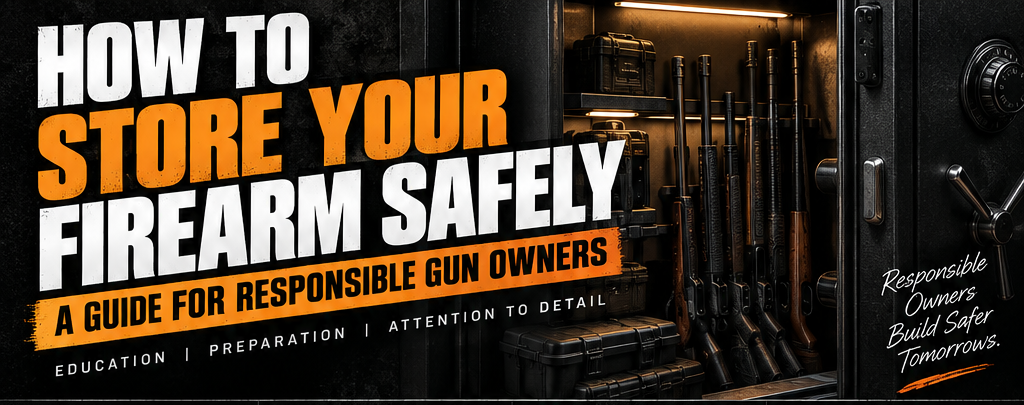
Owning a firearm comes with an important responsibility: making sure it is stored safely when it is not being used.
Proper firearm storage helps prevent unauthorized access, reduces the risk of accidents, and protects your firearm from damage. Whether you own one firearm or several, having a consistent storage routine is an important part of responsible ownership.
At ICB Firearms, we believe responsible firearm ownership starts with education, preparation, and attention to detail.
Here are some important things every firearm owner should consider when creating a safe storage system.
A firearm should never be left somewhere that allows unauthorized people to access it.
This is particularly important in homes where there may be:
It also gives firearm owners a consistent system for knowing where their firearms are stored and how they are secured.
There isn't one storage solution that works for every firearm owner.
The right option depends on your home, the number of firearms you own, your available space, and who may have access to your home.
Common storage options include:
A properly secured gun safe can provide a strong layer of protection while allowing you to organize multiple firearms and other valuables in one location.
Larger safes may also provide additional protection against theft and, depending on the model, fire.
Smaller locking containers can be useful for owners who don't need a full-size safe.
These can provide a secure location for individual firearms while taking up less space.
Certain locking devices are designed to prevent unauthorized access or operation of a firearm.
Examples can include:
A locking device should be used appropriately and should not replace understanding the firearm manufacturer's safety recommendations.
One of the most important principles of firearm storage is simple:
This means thinking beyond simply putting a firearm inside a safe.
Consider who knows:
Access information should be protected just as carefully as the firearm itself.
If children live in or regularly visit your home, firearm storage deserves additional attention.
Children should not have unauthorized access to firearms, ammunition, keys, combinations, or access codes.
It's also important to remember that visitors may not have the same level of firearm familiarity or authorization as the owner.
A firearm that is safely stored when you're alone may require additional consideration when other people are present.
Ammunition should also be stored responsibly.
Consider keeping ammunition:
Some firearm owners choose to store ammunition separately from their firearms, while others use dedicated compartments within a secure storage system.
The important consideration is that your storage method should prevent unauthorized access and protect the ammunition from inappropriate storage conditions.
Safe storage isn't only about preventing unauthorized access.
Your storage environment can also affect the condition of your firearm.
When choosing where to store your firearm, consider:
Excess humidity can contribute to corrosion and rust.
Extreme temperatures and rapid temperature changes can create undesirable conditions for firearms and ammunition.
A clean, enclosed storage environment can help reduce the buildup of dust and debris.
Firearms should be stored in a way that prevents unnecessary contact, impacts, or damage.
Secure storage can also help protect your firearms from theft.
A firearm left unsecured can become an attractive target for someone who enters your home.
Depending on your circumstances, consider:
For larger safes, follow the manufacturer's instructions regarding installation and securing the safe to an appropriate structure.
One of the easiest ways to improve firearm storage is to make it a habit.
Instead of deciding where to put your firearm every time you're finished using it, establish a consistent routine.
A consistent routine reduces the chance that a firearm will accidentally be left somewhere unsecured.
Firearm storage considerations don't disappear when you're away from home.
When traveling, firearm owners should understand the laws and requirements that apply to their destination and method of transportation.
Before traveling, consider:
Requirements can vary by jurisdiction and can change over time.
A firearm should not be left somewhere that allows unauthorized access.
A locked safe isn't much of a barrier if an unauthorized person can easily obtain the key or access code.
Putting a firearm somewhere hidden does not necessarily prevent someone from finding or accessing it.
Consider who may be able to access your home when deciding how and where to store your firearms.
A secure location can still expose a firearm to excessive moisture, heat, or other conditions that can contribute to damage.
Inconsistent storage habits can create unnecessary opportunities for mistakes.
Owning a firearm means taking responsibility for what happens when that firearm is in your possession.
That responsibility includes understanding how to:
There is no single storage solution that works for every household.
Before considering your storage setup complete, ask yourself:
☐ Is the firearm secured when it isn't being used?
☐ Can unauthorized people access the firearm?
☐ Are keys, combinations, and access codes protected?
☐ Is ammunition stored responsibly?
☐ Is the storage location protected from excessive moisture and other damaging conditions?
☐ Have I considered children and visitors who may enter my home?
☐ Do I have a consistent storage routine?
☐ Do I understand the applicable storage and transportation laws?
If you can confidently answer these questions, you've taken important steps toward establishing a responsible storage system.
At ICB Firearms, we believe firearm ownership is about more than purchasing a firearm. It's about understanding the responsibility that comes with ownership.
From selecting the right firearm to understanding safe handling, storage, transfers, and applicable regulations, education plays an important role in responsible ownership.
If you have questions about firearms, accessories, storage options, or the products available at ICB Firearms, our team is here to help provide information and point you toward appropriate resources.
VISIT ICB FIREARMSPrecision. Integrity. Community.
This article is provided for general educational purposes and is not legal advice. Firearm-storage, transportation, and other requirements can vary by jurisdiction and may change over time. Always verify the current federal, state, and local requirements that apply to your situation and follow the firearm manufacturer's safety and storage recommendations.
Added to cart
Check out our shop to see what's available
Loading coupons...