
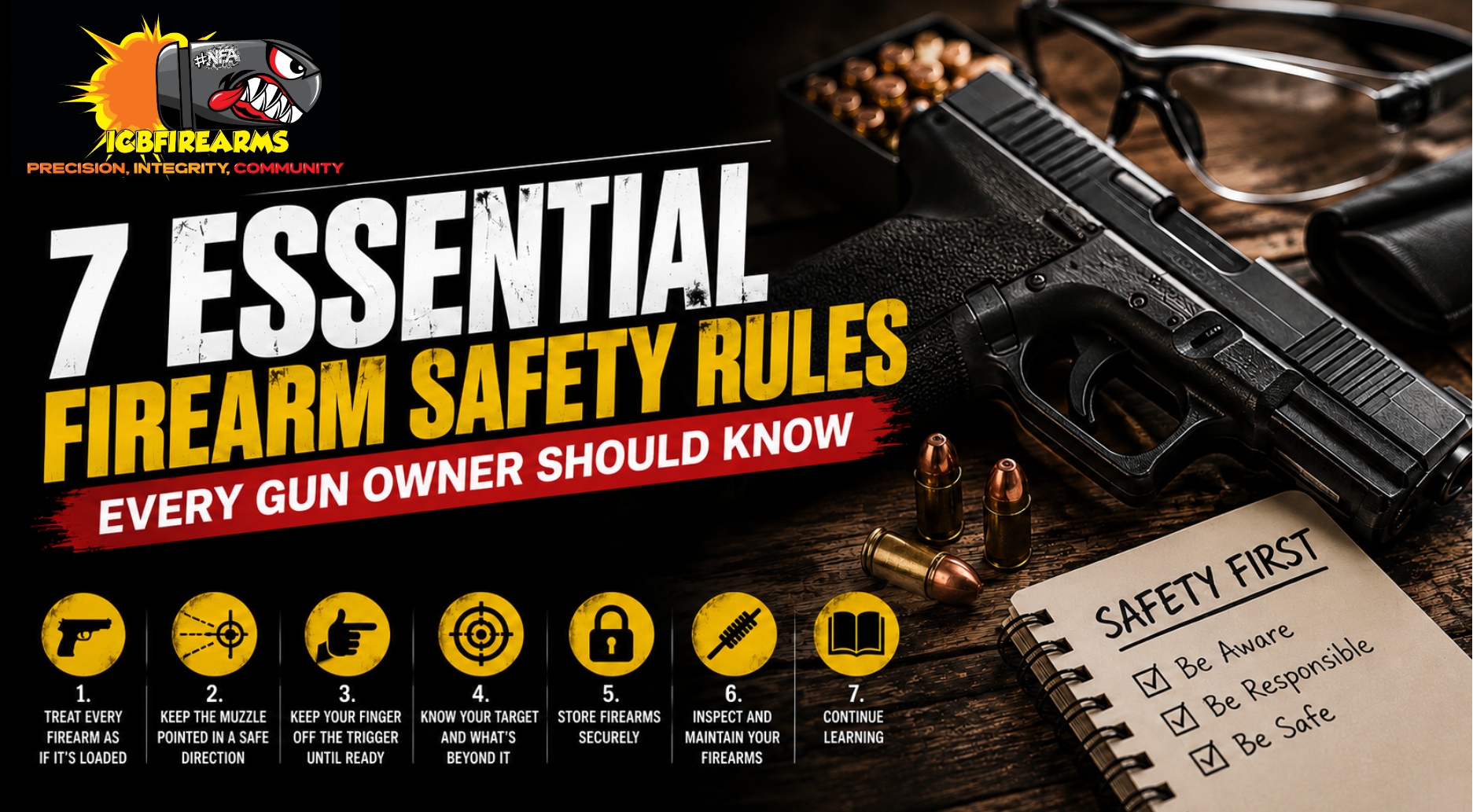
7 Essential Firearm Safety Rules Every Gun Owner Should Know
Responsible firearm ownership begins long before you pull the trigger. Whether you're purchasing your first firearm or have years of experience, following proper safety practices helps protect yourself and those around you.
At ICB Firearms, we believe education is just as important as the equipment you choose. Here are seven essential firearm safety rules every responsible gun owner should know.
1. Always Treat Every Firearm as if It's Loaded
Even if you know a firearm has been unloaded, always handle it as though it is loaded. Developing this habit helps prevent complacency and reduces the risk of negligent handling.
Before handling any firearm:
- Open the action.
- Remove the magazine if applicable.
- Visually inspect the chamber.
- Physically verify the chamber is empty.
Never rely solely on someone else's word that a firearm is unloaded.
2. Keep the Muzzle Pointed in a Safe Direction
The safest firearm is one that is always pointed where an unintended discharge would not cause injury or damage.
Whether at home, on the range, or in the field, always maintain awareness of where your muzzle is pointed.
This simple habit prevents many avoidable accidents.
3. Keep Your Finger Off the Trigger Until You're Ready to Shoot
One of the most common mistakes new shooters make is resting their finger on the trigger too early.
Instead:
- Keep your finger indexed along the frame or receiver.
- Move your finger to the trigger only after you've identified your target and made the decision to fire.
4. Know Your Target—and What's Beyond It
Every bullet or projectile has the potential to travel beyond your intended target. Before firing, consider the entire environment.
- What am I aiming at?
- What is behind it?
- Could I safely stop the projectile if I miss?
Responsible shooters always consider the entire environment before taking a shot.
5. Store Firearms Securely
Safe storage helps prevent unauthorized access, theft, and accidental handling.
Depending on your needs, secure storage may include:
- Gun safes
- Locking cabinets
- Trigger or cable locks
- Locked storage separate from ammunition when appropriate
Every household is different, but secure storage should always be part of responsible firearm ownership.
6. Inspect and Maintain Your Firearms
Regular maintenance helps ensure your firearm continues to function as intended.
Routine maintenance includes:
- Cleaning after use
- Inspecting for wear
- Checking optics and accessories
- Lubricating according to the manufacturer's recommendations
A clean firearm is generally easier to inspect and maintain than one that has been neglected.
7. Continue Learning
Firearm ownership is an ongoing learning experience.
New equipment, training opportunities, and evolving best practices make continuing education valuable for shooters of all experience levels.
Whether you're purchasing your first firearm or expanding your collection, asking questions and seeking knowledgeable guidance helps you make informed decisions.
Responsible Ownership Starts with Education
Owning a firearm comes with important responsibilities. Building safe habits, maintaining your equipment, and continuing to learn are all part of becoming a confident and responsible firearm owner.
At ICB Firearms, we're committed to helping customers make informed decisions by providing knowledgeable guidance and trusted service every step of the way.
Whether you're selecting your first firearm or looking to add to your collection, our team is here to answer your questions and help you find the right fit for your needs.
Frequently Asked Questions
How often should I clean my firearm?
Cleaning intervals vary depending on the firearm, ammunition, and usage. Follow the manufacturer's recommendations and inspect your firearm regularly.
Is a gun safe worth it?
For many firearm owners, a quality gun safe provides secure storage, helps prevent unauthorized access, and protects firearms from theft and environmental damage.
Where can I learn more about firearm safety?
Local training courses, certified instructors, and reputable firearms organizations can provide valuable education for shooters of all experience levels.